



Late middle period humanoid ceramic bottle
The humanoid ceramic vase from the late middle period (approximately 1000-1470 AD) is a historically significant artwork, with its origins dating back to ancient American civilization. This specific ceramic bottle was returned from the Dutch Republic and sold at an auction in Vendu Rotterdam in 2022. It is an important physical evidence for studying ancient culture, craftsmanship, and trade exchanges. During this period, pottery exhibited diversity in shape, decoration, and usage. Ceramic bottles, as representatives of that era, not only reflected the daily needs of people at that time, but also showcased their artistic aesthetics and cultural characteristics.
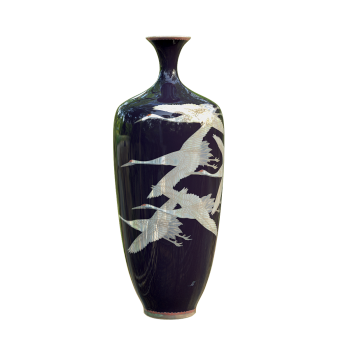
Japanese Red crowned Crane Black Ceramic Bottle (Right) - Krakow Japan Art and Technology Center, Poland
The Japanese Art and Technology Center, located in Krakow, Poland, is renowned for its exquisite craftsmanship and traditional themes, showcasing the level of Japanese craftsmanship during the Meiji period (1868-1912). Adopting cloisonn é enamel technology, silver wire is used to outline the pattern of flying cranes flying on a dark blue background, and the white crane body is embellished with gray and red elements, presenting a continuous style. At the edge of the bottle mouth and near the base, a red circular pattern border can be seen. Under the base, you can see the symbol of the "ヨ" syllable in a form similar to Japanese katakana. He is a representative of Japanese culture and craftsmanship.
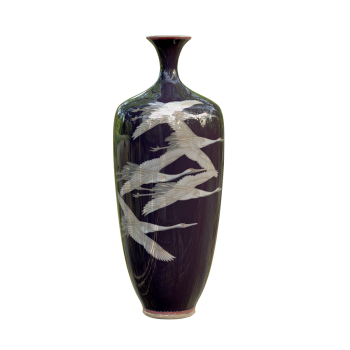
Japanese Red crowned Crane Black Ceramic Bottle (left) - Krakow Japan Art and Technology Center, Poland
The Japanese Art and Technology Center, located in Krakow, Poland, is renowned for its exquisite craftsmanship and traditional themes, showcasing the level of Japanese craftsmanship during the Meiji period (1868-1912). Adopting cloisonn é enamel technology, silver wire is used to outline the pattern of flying cranes flying on a dark blue background, and the white crane body is embellished with gray and red elements, presenting a continuous style. At the edge of the bottle mouth and near the base, a red circular pattern border can be seen. Under the base, you can see the symbol of the "ヨ" syllable in a form similar to Japanese katakana. He is a representative of Japanese culture and craftsmanship.

Chinese Porcelain Salt Bottles - Krakow Salt Museum
It is a Chinese porcelain item collected in the Krakow Salt Museum. It is a representative of early white blue porcelain, decorated with cobalt blue, and is a rare form of Far Eastern porcelain imported to Europe. Created during the Kangxi reign of China (1662-1722), it is an outstanding representative of ancient Chinese porcelain art. The porcelain of the Kangxi period is famous for its exquisite craftsmanship and unique aesthetics. This porcelain not only showcases the traditional craftsmanship of Chinese porcelain, but also reflects the cultural exchange and trade between China and Europe at that time.

Lekisos Ancient Greek Ceramic Bottles - Hunter Museum in Limerick
It is a container used in ancient Greece to hold oil and is often used as burial objects in tombs. It has a circular base, a high and wide body, wide shoulders and narrow bottom, a high neck, and a deep opening that extends outward. There is a high and narrow handle on the bottle that extends all the way to the shoulder. The bottle was originally painted with a pattern, but now it is severely worn and difficult to recognize. The production date is approximately the 4th century BC. The Hunter Museum currently exists in Limerick.
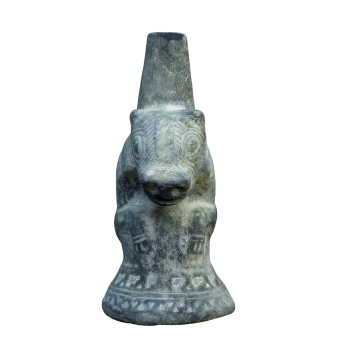
Chim ú - Lambayeque style ceramic bottle from Peru
It is a cultural artwork originating from the northern coast of Peru, produced between approximately 1000 and 1470 AD. This ceramic bottle is renowned for its unique artistic style and exquisite craftsmanship, often adorned with rich patterns and symbolic images, reflecting the religious beliefs and daily life of the society at that time. In history, due to various historical reasons, some ceramic bottles have been lost overseas. It was once auctioned by W&H Peacock Auction Company in the UK, but fortunately, it was successfully recovered and returned to its original country in 2023. The return of cultural relics reflects the international community's emphasis and efforts on the protection of cultural heritage.
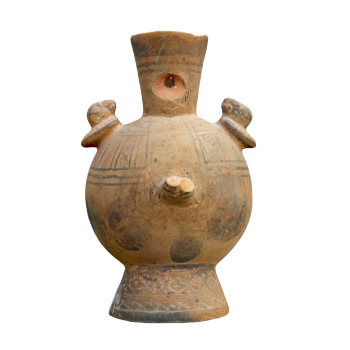
Peruvian Lambayeque style ceramic bottle
It is an artwork representing the pre Columbian culture of Peru. This type of ceramic bottle usually has exquisite technical and aesthetic features, as well as rich cultural symbolic significance. Known for its technical quality and aesthetic features, it reflects the development of the region's culture and the evolution of its style. It showcased the superb craftsmanship of the craftsmen at that time and conveyed profound cultural and religious messages through its designs and patterns. In the late middle period, techniques such as molding, application, and etching were used. Returned by Swiss authorities in 2023 and successfully recognized as a Peruvian national treasure. The return of ceramic bottles is not only a respect for cultural heritage, but also a recognition of historical continuity.

Popular Models


Honey Badger (3D animated model)
199 View

Guinea fowl (3D animated model)
168 View

Wild Goose (3D animated model)
190 View

Red Fox (3D animated model)
158 View
Random Model

Chinese Traditional Wooden Boat
471 View
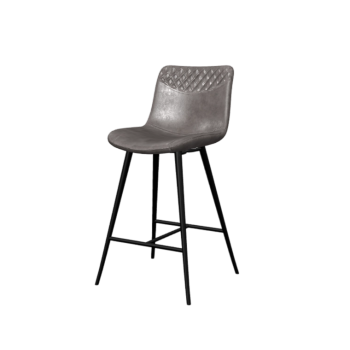
Highchair
682 View

A slice of watermelon
319 View
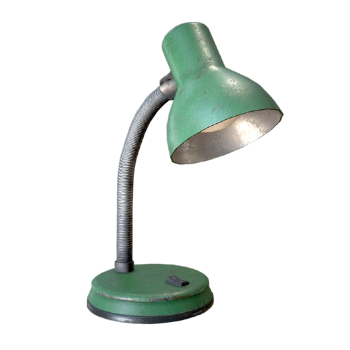
Vintage Green Metal Table Lamp
524 View
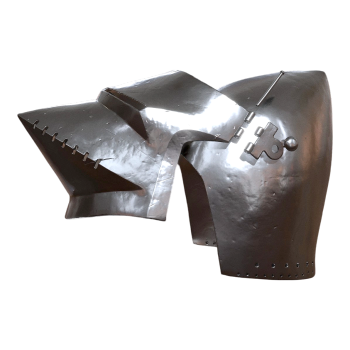

Maxillosaurus (3D animated model)
123 View

Florida Native Four-Lattice Pottery
492 View
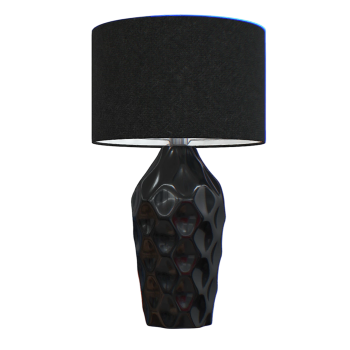
Simple Style Black Fabric Table Lamp
516 View
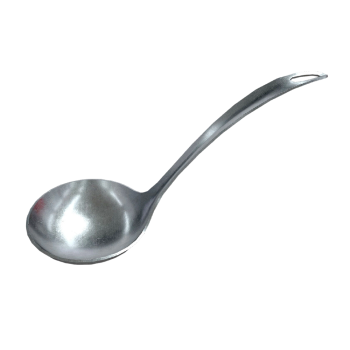
Stainless steel soup spoon
469 View

Galapagos Tortoise Specimen
741 View